Thousand Oaks Homeowner Rodent Guide
May 5, 2026
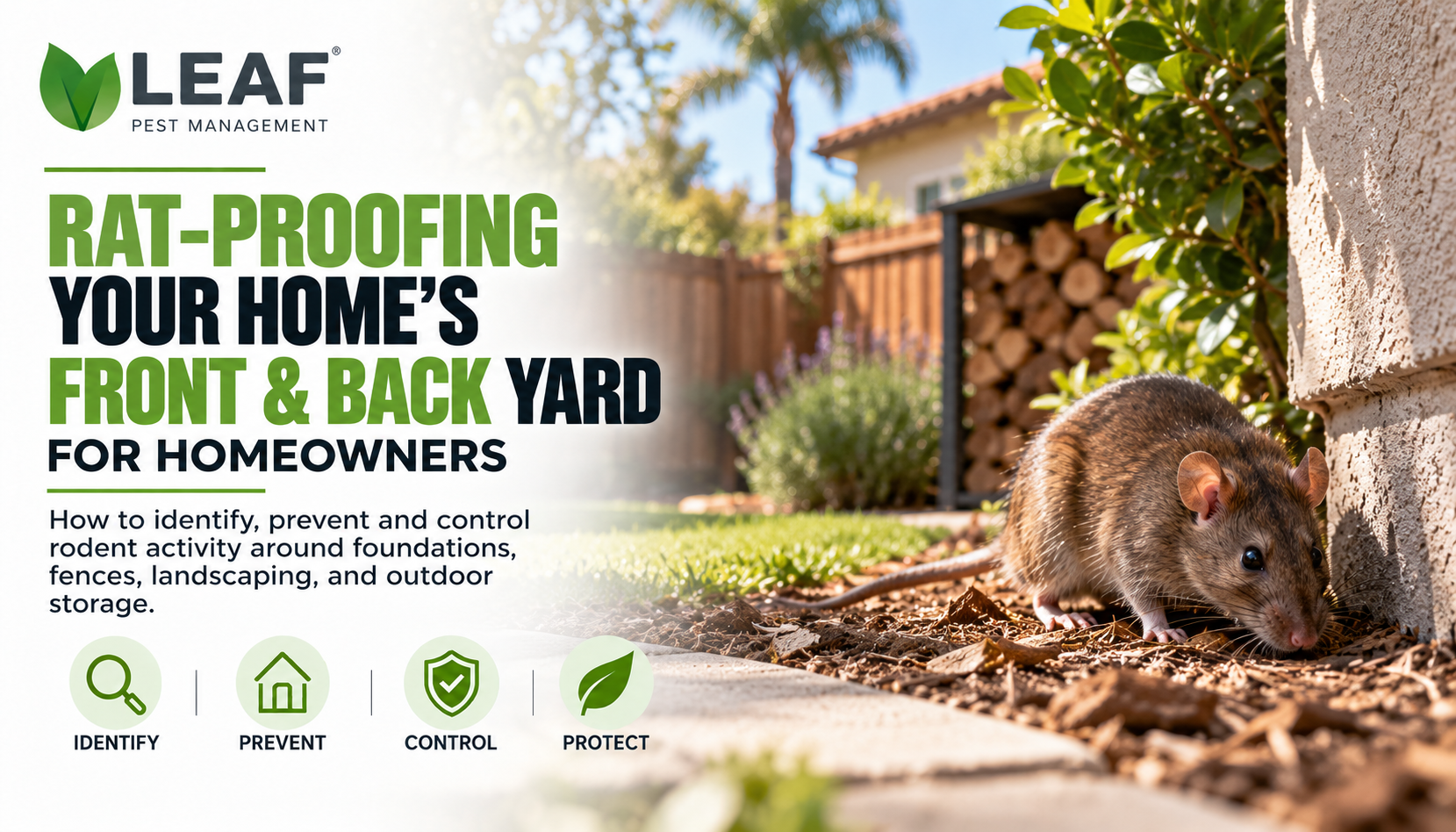
Introduction Summary: Thousand Oaks’ mild Mediterranean climate, abundant citrus trees and dense ornamental vegetation make the city an inviting habitat for rodents. These animals are part of the local ecology, but when populations explode they invade attics, crawl spaces and kitchens, putting families and pets at risk. Rodents reproduce quickly, contaminate food and can transmit serious diseases. Homeowners who learn to identify common species, recognise signs of infestation and implement effective prevention measures are better equipped to protect their property and health.
Why are Rodents are so prevalent in Thousand Oaks, CA?
A small group of dangerous species
Rodents are more than a nuisance. Roof rats, Norway rats and house mice gnaw constantly to wear down their incisors; their chewing damages insulation, wood and wiring. They leave droppings and urine in pantries and attics, contaminate stored foods and spread fleas that can transmit serious diseases. The University of California Cooperative Extension warns that roof rats on the Central Coast are the primary cause of current local problems and that their fleas are capable of transmitting disease. A single entry hole just half an inch in diameter is enough for a rat to squeeze through. Given that female rodents reach sexual maturity within weeks and produce multiple litters annually, a small incursion can quickly become a severe infestation.
What Type of Rats and Rodents are in Thousand Oaks, CA
Roof rat (Rattus rattus)
Roof rats, also called black rats, are slender rodents with tails longer than their bodies. They nest in high places such as attic spaces, dense shrubs, palm trees, and ivy. On Ventura County’s Central Coast (which includes Thousand Oaks), roof rats are now more common than Norway rats. They prefer fresh fruits, nuts, and seeds, and are often attracted to citrus and avocado trees. Roof rats are nimble climbers that use trees and utility lines to access roofs.
Roof rats reproduce explosively. Pestec notes that females have an average litter size of 5–12 pups and can produce up to 9 litters per year (averaging 5), with a gestation period of only 20–25 days. In warm climates, they breed year‑round, and because offspring reach sexual maturity in 9 weeks, one pair can spawn dozens of descendants within a year. The combination of high fertility and arboreal habits makes roof rats the most challenging structural pest in Thousand Oaks.
Norway rat (Rattus norvegicus)
Norway rats, also called brown rats, are larger and heavier than roof rats. They have small ears, a blunt snout and a tail shorter than the head and body combined. Unlike roof rats, they prefer to burrow; local pest experts report finding Norway rats in basements, sewers and ground‑level structures. Norway rats gnaw through walls and foundations, create ground burrows under junk piles and often remain out of sight.
According to the Internet Center for Wildlife Damage Management, female Norway rats come into heat every four to five days and can mate again within days after giving birth. They typically produce 3–6 litters per year, each containing 6–12 pups. Young rats begin eating solid food at about three weeks and become independent at four weeks. Norway rats thus have the potential to triple or quadruple their numbers in a single season.
House mouse (Mus musculus) and deer mouse (Peromyscus maniculatus)
House mice are small (about 4 inches long) and can squeeze through tiny openings. Ventura pest specialists describe them as dusty gray with cream‑colored bellies. These mice are active at night and are prolific breeders — Orkin notes that a single female can produce up to eight litters per year with an average of six pups per litter. House mice reach sexual maturity at just six weeks, so infestations grow quickly.
Deer mice have tawny backs and white bellies. They favour sheds and outbuildings rather than dwellings. Deer mice may carry hantavirus, a serious respiratory illness; although human cases are rare, the risk underscores the importance of excluding all rodents from living spaces.
Tree squirrels, voles, moles, gophers and ground squirrels
Thousand Oaks homeowners also encounter rodents that primarily live outdoors. Tree squirrels are diurnal and readily visible; if you see them running on power lines or roofs, they may be trying to nest in the attic. Voles (meadow mice), moles and gophers tunnel through lawns, destroying turf and plants. UC Cooperative Extension notes that sandy, irrigated soils along the Central Coast provide ideal habitat for gophers, moles and squirrels, and that young gophers dispersing in spring can lead to sudden new mounds in previously uninfested yards. Gophers are wary of traps; successful control often requires setting two traps facing opposite directions in the burrow, and baits or gas cartridges must be placed carefully.
| Rodent | Key features | Reproduction (approx.) | Common habitats |
|---|---|---|---|
| Roof rat | Slender body; tail longer than body; agile climber | 5–12 pups per litter; up to 9 litters/yr (avg 5); gestation 20–25 days | Attics, trees, dense shrubs, vines; feed on fruit, nuts, pet food |
| Norway rat | Larger body; blunt snout; tail shorter than body | 6–12 pups per litter; 3–6 litters/yr | Ground burrows, basements, sewers, junk piles |
| House mouse | Small, dusty gray with cream belly | 6 pups per litter; up to 8 litters/yr | Inside walls, kitchens, pantries, attics; active at night |
| Deer mouse | Tawny back, white belly | 2–4 litters/yr (3–6 pups each, general range) | Barns, sheds, outbuildings; rarely invade homes |
| Tree squirrel | Diurnal; bushy tail | 1–2 litters/yr | Trees, roofs, power lines |
| Voles & gophers | Chunky, burrowing rodents; create runways and mounds | Voles: multiple litters of 3–8 pups; gophers: 1–3 litters of 3–7 pups (general ranges) | Lawns, gardens; burrow in soil |
Health risks and property damage
Rodents threaten both physical structures and human health. They chew on wood, plastic and wiring, which can create entry points for water and other pests and even spark electrical fires. Their nesting materials and gnawed insulation degrade energy efficiency. Droppings and urine cause unpleasant odours and harbour pathogens. Ventura pest experts warn that rats and mice can contaminate food packages, chew holes in walls and leave droppings and urine along their runways. Tree squirrels are less likely to transmit disease but can also chew through soffits and electrical lines.
Disease transmission is a serious concern. Roof rats and their fleas can carry bubonic plague; UC Cooperative Extension cautions that the plague bacterium persists in California’s rodent population and that human infection occurs when a flea feeds on a diseased rat and then bites a person. Rodents may also spread leptospirosis (through urine), salmonellosis (through contaminated food), rat‑bite fever, hantavirus (deer mice), and flea‑borne typhus. Even when diseases are not transmitted, rodent allergens can trigger asthma and allergic reactions.
How to recognize an infestation
Early detection reduces the time and cost required to achieve control. Signs of rodent activity include:
- Droppings: pellet‑shaped feces near food sources, along walls, or in hidden corners. Roof‑rat droppings are slightly larger than grains of rice, while mouse droppings are rice‑sized and pointed.
- Gnaw marks: chewed wires, wood, plastic, and even metal; gnawing around entry points. Rats can fit through openings as small as half an inch.
- Noises: scratching or scurrying in walls and ceilings, especially at night.
- Nests: shredded paper, fabric, and plant material assembled in attics, crawl spaces, or storage boxes.
- Runways and burrows: well‑worn tracks along fences or baseboards, ground burrows under debris, or mounds in lawns.
- Pet behavior: dogs or cats staring at walls or cabinets, indicating movement inside.
Preventing rodents: integrated pest management
Successful rodent control depends on integrated pest management (IPM) – combining sanitation, exclusion, habitat modification, and, when necessary, targeted trapping or baiting. The following measures are adapted from the University of California Cooperative Extension, Ventura County pest specialists, and professional rodent control guidelines:
- Eliminate food and water sources – Store human and pet food in rodent‑proof containers and remove pet food at night. Clean up fallen fruit, nuts, and birdseed daily. Fix leaky plumbing and remove standing water.
- Reduce shelter and nesting sites – Prune dense shrubs, ivy, and vines to eliminate hidden runways. Keep wood and lumber piles neatly stacked and off the ground. Remove yard clutter, scrap wood, and debris. Use hardware cloth to block access under decks, sheds, and garden fencing.
- Seal entry points – Inspect the exterior of your home. Seal gaps around pipes, vents, attic louvers, and crawl‑space vents with steel wool, copper mesh, or metal flashing. Roof rats can squeeze through openings as small as a dime, and Norway rats through half‑inch holes. Install door sweeps and repair damaged screens.
- Manage outdoor rodents – For gophers, use two traps in the burrow runway, facing opposite directions, and move them if no catch is made. Baits and gas cartridges can be effective but must be used carefully. For voles and moles, reduce irrigation and remove tall grass or weeds that provide cover.
- Use traps strategically – Snap traps are the most humane and effective indoor control method. Place them along runways or against walls, using peanut butter, nuts or dried fruit as bait. Check traps daily, dispose of carcasses with gloves, and wash your hands thoroughly. For roof rats, set traps on rafters or in attic spaces. Avoid glue boards as they cause prolonged suffering.
- Avoid indiscriminate poisons – Anticoagulant baits take several feedings to be lethal and may result in dead rodents in walls or attics. Secondary poisoning can harm pets and wildlife. Use rodenticides only under the supervision of licensed professionals.
- Consult professionals – Extensive or recurring infestations often require professional help. Licensed pest management companies perform detailed inspections, identify species, implement exclusion and trapping programs, and provide ongoing monitoring.
Final Thoughts
Rodents are a fact of life in Southern California, but an infestation doesn’t have to be. By understanding the species that inhabit Thousand Oaks and implementing an integrated pest management strategy, homeowners can protect their families and property. Regularly inspect your home, store food securely, eliminate harborage and seal even the smallest openings. Recognise early warning signs like droppings and gnaw marks, and act swiftly. If the problem persists or you feel overwhelmed, consult a professional pest management company such as Leaf Pest Management for a comprehensive solution. Staying vigilant and proactive is the most effective way to safeguard your Thousand Oaks home and family from rodents.
References: https://ipm.ucanr.edu/PMG/PESTNOTES/pn74106.html, https://rodentcontrolinc.com/, https://versatechpm.com/ultimate-guide-to-rodent-control-in-los-angeles-tips-tricks-and-expert-solutions/, https://www.icwdm.org/species/rodents/rats/norway-rats/, https://www.orkin.com/pests/rodents/mice/house-mice, https://ucanr.edu/county/cooperative-extension-ventura-county/gophers
Latest Posts