
Thousand Oaks Homeowner Cockroach Guide


 May 5, 2026

Introduction Summary: Thousand Oaks’ mild Mediterranean climate, abundant citrus trees and dense ornamental vegetation make the city an inviting habitat for rodents. These animals are part of the local ecology, but when populations explode they invade attics, crawl spaces and kitchens, putting families and pets at risk. Rodents reproduce quickly, contaminate food and can transmit serious diseases. Homeowners who learn to identify common species, recognise signs of infestation and implement effective prevention measures are better equipped to protect their property and health.

Why Cockroaches are so prevalent in Thousand Oaks, CA

California’s Mediterranean climate makes Thousand Oaks a wonderful place to live – and an ideal habitat for cockroaches. Cockroaches thrive in warm temperatures, and the National Pest Management Association’s 2025 Bug Barometer warns that shifting weather patterns will increase cockroach activity in many U.S. cities. Nationwide, the U.S. Census Bureau reports that more than 14 million U.S. housing units saw cockroaches between April 2020 and April 2021. This corresponds to about 11.3 % of households reporting roach sightings. Urban homes are particularly vulnerable; the Asthma & Allergy Foundation of America (AAFA) notes that 78%–98% of urban homes harbor cockroaches, sometimes numbering 900–330,000 per home. In Los Angeles and other southern cities, warmer winters drive populations indoors. Structures with sagging roofs or other damage are 3.9 times more likely to have a roach sighting.


Besides being unpleasant, cockroaches pose real health risks. The U.S. Environmental Protection Agency (EPA) warns that proteins in cockroach feces and saliva can trigger asthma attacks. Studies cited by NPMA indicate that 23%–60% of urban asthma patients are sensitized to cockroach allergens. Cockroaches can carry 33 types of bacteria, six parasitic worms and over seven other human pathogens, contaminating food and surfaces. Their presence is associated with increased wheezing, missed school days and unscheduled medical visits. Effective prevention and management are therefore essential for a healthy home.

Meet the Invaders: Most Common Cockroaches in Thousand Oaks

Not all roaches behave the same. Correct identification is the first step to treatment. The University of California’s Integrated Pest Management (UC IPM) program lists several species that infest California homes:

Species & key traits Habitat & behavior Health concerns/risks
German cockroach (Blattella germanica) Most common indoor species in California; small (about ½ inch) light-tan body with two dark stripes; prefers warm (70–75 °F), humid kitchens and bathrooms. Females carry an egg case (ootheca) containing ~30 young and can produce >30,000 descendants per year. Contaminates food and utensils; produces allergens; capable of transmitting Staphylococcus, Streptococcus, hepatitis and coliform bacteria; implicated in typhoid and dysentery.
Brown‑banded cockroach (Supella longipalpa) Accounts for ~1 % of indoor infestations; small with light bands across wings; hides in warm, dry spots such as behind artwork, in electronics and high cupboards. Prefers starchy materials (glue on stamps, paper) and spreads throughout a home, making treatment difficult; capable of producing over 600 offspring per year.
Oriental cockroach (Blatta orientalis) Dark, shiny “water bugs” roughly 1 inch long; males have short wings and females are wingless. Live in cool, damp areas like basements, crawl spaces, garages and drains. Slow-moving and often emit a strong musty odor; may carry bacteria such as Salmonella and Shigella when travelling from sewers or drains into homes.
American cockroach (Periplaneta americana) Largest domestic roach (1.5–2 inches); reddish‑brown with a yellowish figure‑eight on the head. Prefers warm, humid environments outdoors but will enter homes through drains, basements and utility rooms. Associated with sewer systems; capable of transferring pathogens from human waste into kitchens and food areas.
Turkestan cockroach (Blatta lateralis) Emerging outdoor species in Southern California; often misidentified as Oriental cockroach. Females have cream‑colored markings on the abdomen; they thrive in water meter boxes, compost piles and cracks between concrete blocks. Has a reproductive advantage over the Oriental species, producing more eggs and maturing faster. Occasional indoor invader when weather drives them inside.

Why German Cockroaches are such a serious threat to your home & business in Westlake Village

German cockroaches are extremely prolific. One female and her offspring can produce over 30,000 roaches in a year. The Knox Pest Control guide points out that these cockroaches love to hide in tiny cracks, squeezing into warm appliances and cabinet hinges, and that seeing even one roach often indicates a significant hidden infestation. Leaf Pest Management’s local guide echoes this: by the time you notice a single roach, the population is already established behind walls. Their rapid breeding and resistance to some DIY pesticides make professional intervention essential.

Health Hazards of Cockroach Infestations

Asthma and Allergies – Cockroach droppings, shed skins, and body parts contain allergen proteins. The EPA notes that these allergens can trigger asthma attacks. Research shows that 23 %–60 % of urban residents with asthma are sensitized to cockroach allergens, and children living in infested homes have more frequent wheezing, missed school days, and emergency visits.


Food‐borne Illness – Cockroaches forage in garbage, sewers and drains. The National Pest Management Association states that they can transmit 33 types of bacteria, including E. coli and Salmonella. German cockroaches may also spread Staphylococcus, Streptococcus, hepatitis and other pathogens.


Odors and Contamination – Cockroach infestations often leave an unpleasant, oily or musty odor due to aggregation pheromones and decaying bodies. They contaminate food, fabrics and books with droppings and can chew on household items.

Signs That You Have a Cockroach Problem

Detecting an infestation early improves the chances of elimination. Watch for these indicators:


  1. Droppings – Small roaches, such as German and brown‑banded, leave tiny black specks resembling coffee grounds; larger roaches leave cylindrical pellets.
  2. Unpleasant Odor – A persistent oily or musty smell, especially near kitchens or pantry areas, is characteristic of moderate‑to‑heavy infestations.
  3. Egg Cases (Oothecae) – Brownish, purse‑shaped capsules glued under furniture, inside cabinets or behind appliances signal active breeding. German roach females carry the egg case until it hatches, increasing survival rates.
  4. Shed Skins and Smear Marks – Roach nymphs molt 5–8 times, leaving translucent shells near hiding spots. Dark smear marks along walls or around water sources also indicate activity.
  5. Daytime Sightings – Cockroaches are nocturnal; seeing them during daylight means the colony is overcrowded, pushing individuals into the open. 

Homeowner Key Recommendations for Cockroach Control

Ventura County’s Mediterranean climate means hot, dry summers and mild, wet winters. German cockroaches thrive in kitchens and bathrooms where humidity persists, while Turkestan and oriental cockroaches build up outdoors and invade homes during heat waves or when irrigation leaks provide moisture. During drought years, roaches may move indoors in search of water. Monitoring irrigation systems and reducing standing water around foundations are especially important for Thousand Oaks residents.


Homes with structural damage – such as cracked foundations, sagging roofs or leaky plumbing – are 3.9 times more likely to have roach sightings. Many of the city’s older homes were built before modern building codes, so periodic maintenance is key. Roaches can enter through tiny gaps around utility penetrations, vents and crawlspace openings; installing screens and sealing these gaps helps exclude outdoor species.


Local pest pressure often surges in spring and fall when temperature and humidity fluctuate. Seeing roaches during the day typically indicates a heavy infestation – at this stage, DIY sprays may only scatter the population. Leaf Pest Management’s technicians are trained to identify the specific species (German, American, oriental or Turkestan) and apply tailored treatments that break the life cycle.

Final Thoughts

Cockroaches are ancient survivors. Their rapid reproduction and ability to hide in tiny crevices make them formidable household pests. Fortunately, vigilance and integrated pest management can keep them at bay. Regular sanitation, sealing entry points and monitoring with traps form the backbone of prevention. When populations grow or German cockroaches appear, professional help ensures safe and effective elimination. By understanding the species common to Thousand Oaks and following the prevention strategies above, homeowners can protect their families from the health hazards and stress of cockroach invasions.


Need help with a roach problem? Contact Leaf Pest Management today for a tailored inspection and treatment plan to keep your Thousand Oaks home roach‑free.

References:

References: 

Book an Inspection

Sign up to get industry insights, trends, and more in your inbox.

Contact Us


SHARE THIS

Latest Posts

signs of termite infestation
By Will Schmidt • October 15, 2026
Learn 7 warning signs of termites in Southern California homes. Identify mud tubes, droppings, wings, and wood damage before costly repairs.

home pest inspection,pest inspection,pest inspection checklist
By Will Schmidt • October 5, 2026
Learn what a professional home pest inspection includes, what technicians look for, and how Leaf Pest Management identifies pest problems and prevention needs.

Leaf Pest Control ad: cockroach on wood floor in bright home, with bold text on getting rid of cockroaches in Los Angeles.
By Richard Merjil • October 5, 2026
Full Ant Prevention Guide for southern CA homeowners and businesses.
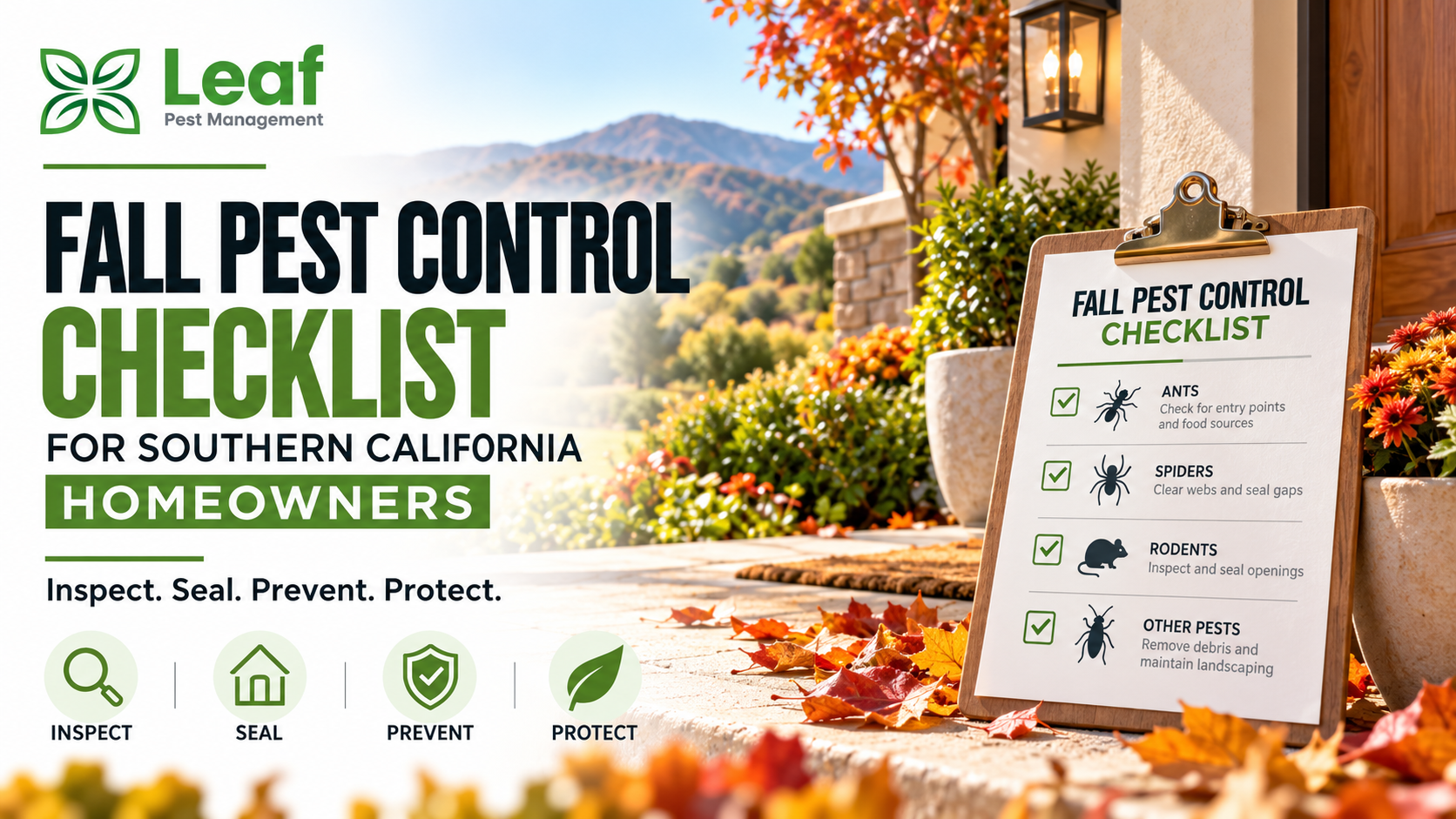
fall pest control,fall bugs,bugs in teh fall,fall pest control tips
By Richard Merjil • October 5, 2026
Use this fall pest control checklist to help prevent rodents, ants, spiders, cockroaches and other pests around your Southern California home.

cricket control thousand oaks,prevent crickets home,cricket infestation tips
By Richard Merjil • May 5, 2026
Learn how to prevent cricket infestations in Thousand Oaks homes with proven tips for exclusion, moisture control, and long-term pest management.

rodent control thousand oaks,rat control,mouse prevention
By Richard Merjil • May 5, 2026
Learn how to protect your Thousand Oaks home from rats, mice, and rodents with proven prevention tips, local species insights, and expert control strategies.

mosquito control Thousand Oaks,prevent mosquitoes at home,mosquito bite protection
By Richard Merjil • May 1, 2024
Learn how to prevent mosquitoes in Thousand Oaks, CA with expert tips on eliminating breeding sites, reducing bites, and protecting your home and family.

rat-proofing guide for homeowners
By Richard Merjil • January 16, 2024
Learn how to prevent rat infestations in your southern California home.
homeowner roach control guide
By Richard Merjil • December 16, 2023
How to know if you found one cockroach or an infestation, and how to keep it from happening again.
homeowner cricket guide
By Richard Merjil • November 16, 2023
Cricket Removal and prevention guide for Los Angeles homeowners and businesses.
Show More